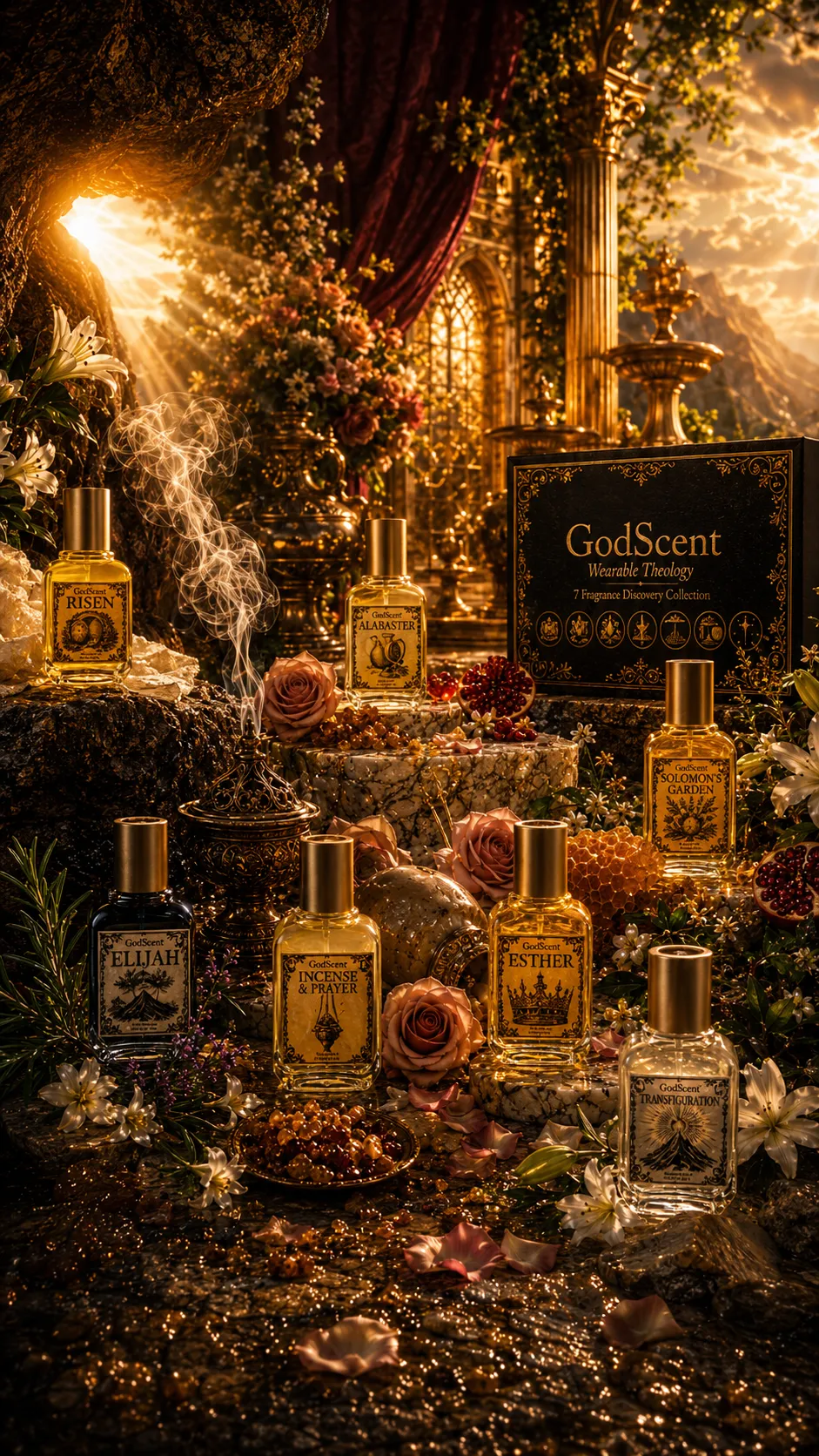

Perfume in the Bible appears far more often than most readers expect — not as a single symbolic detail, but as a thread running through nearly every major turn of the story. It shows up in a bride's wedding preparations, in the law given at Sinai, in a king's love poetry, at a dinner in Bethany, at a manger, at a cross, and at an empty tomb. This guide walks through the major appearances in canonical order, with the actual verses attached, and points to where each one is explored in more depth.
Where It Starts: A Smell That Reads as Blessing
One of the earliest scenes tied to scent in Scripture isn't about perfume at all — it's about the smell of a garment. When Jacob, disguised as his brother, comes close enough for Isaac to smell his clothes, the old man's blessing follows almost immediately, prompted by that smell (Genesis 27:27). Scripture doesn't linger on this as a perfume scene, but it sets a pattern that holds for the rest of the Bible: scent is consistently the detail that signals something — a blessing, an offering, a person, a moment — is real and present, not just described.
Perfume in the Bible: An Ordinary Part of Life
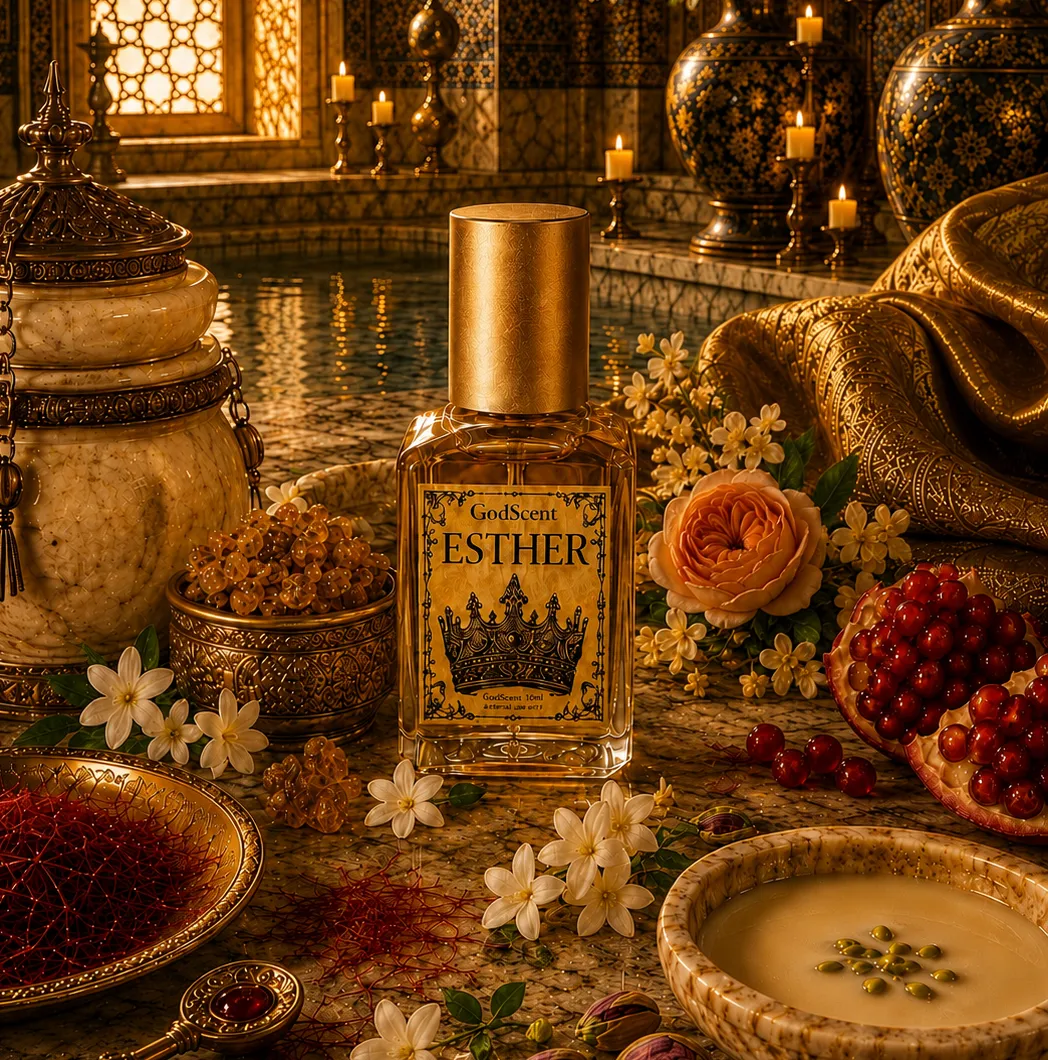
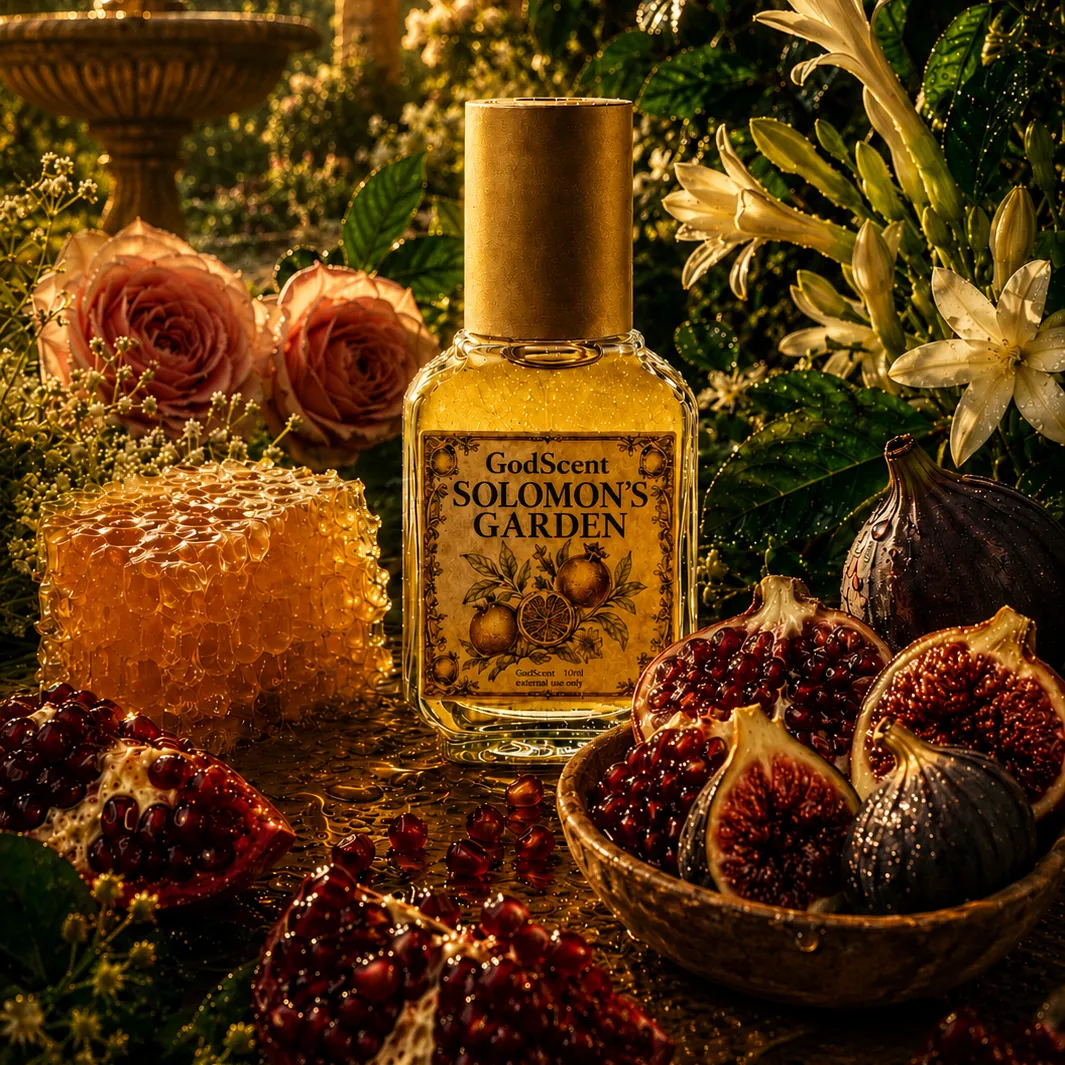
Before it becomes theological, perfume in Scripture is simply domestic. Naomi tells Ruth to wash and anoint herself before approaching Boaz — ordinary grooming before an important moment (Ruth 3:3). Esther spends a full year in cosmetic preparation before she is presented to the king, "six months with oil of myrrh, and six months with sweet odours" (Esther 2:12) — the verse behind GodScent's Esther. The Song of Solomon treats fragrance as an expression of love and longing throughout, most explicitly in its inventory of a garden's aromatics: "Spikenard and saffron; calamus and cinnamon, with all trees of frankincense; myrrh and aloes, with all the chief spices" (Song of Solomon 4:14) — a single verse naming seven fragrant substances at once, and the backdrop for Solomon's Garden. Proverbs sums up this ordinary category plainly: "Ointment and perfume rejoice the heart" (Proverbs 27:9).
Two Formulas the Law Set Apart
Against that ordinary backdrop, Exodus 30 draws a sharp line around two specific blends. The holy anointing oil — myrrh, cinnamon, calamus, and cassia in olive oil (Exodus 30:23-25) — was reserved for consecrating the tabernacle and its priests, and explicitly forbidden for personal use: "Upon man's flesh shall it not be poured" (Exodus 30:32). The incense burned at the altar — stacte, onycha, galbanum, and frankincense (Exodus 30:34) — received the same restriction. These were not "biblical perfume" in the sense of something anyone could wear; they were ritual formulas, set apart by law, with a real penalty attached to reproducing them for ordinary use (Exodus 30:33, 30:38). That distinction matters more than it might first appear. It means the Bible itself already separates "a fragrance that references Scripture" from "a claim to recreate something Scripture reserved for one purpose" — and it's the reason a company can build biblical perfume in good faith without implying it has bottled the Exodus 30 formula. A full breakdown of that distinction covers what it means for a modern fragrance to call itself biblical without claiming to reproduce either one.
The Alabaster Jar
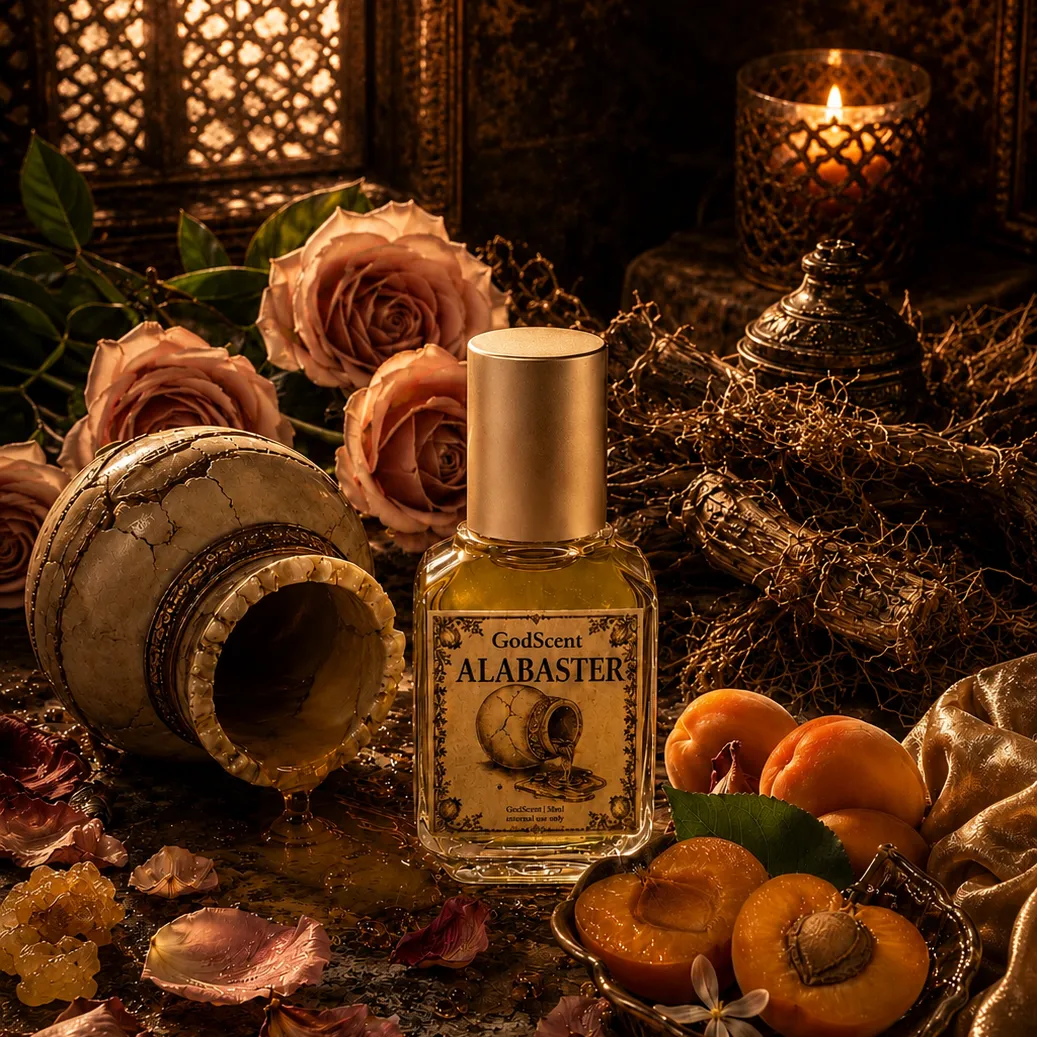
The most vivid single scene of perfume in the Bible happens at a dinner in Bethany. A woman — named as Mary in John's account, unnamed in Mark and Matthew's — breaks open an alabaster jar of spikenard "very precious" and pours the entire thing over Jesus, filling the house with its fragrance (Mark 14:3; John 12:3). The ointment was worth nearly a year's wages, and the jar, once broken, could not be resealed or the contents saved for later. It is, by any measure, the most extravagant single gift recorded in the Gospels. The full story is worth its own read, and it's the scene GodScent's Alabaster is built from.
Gifts for a King
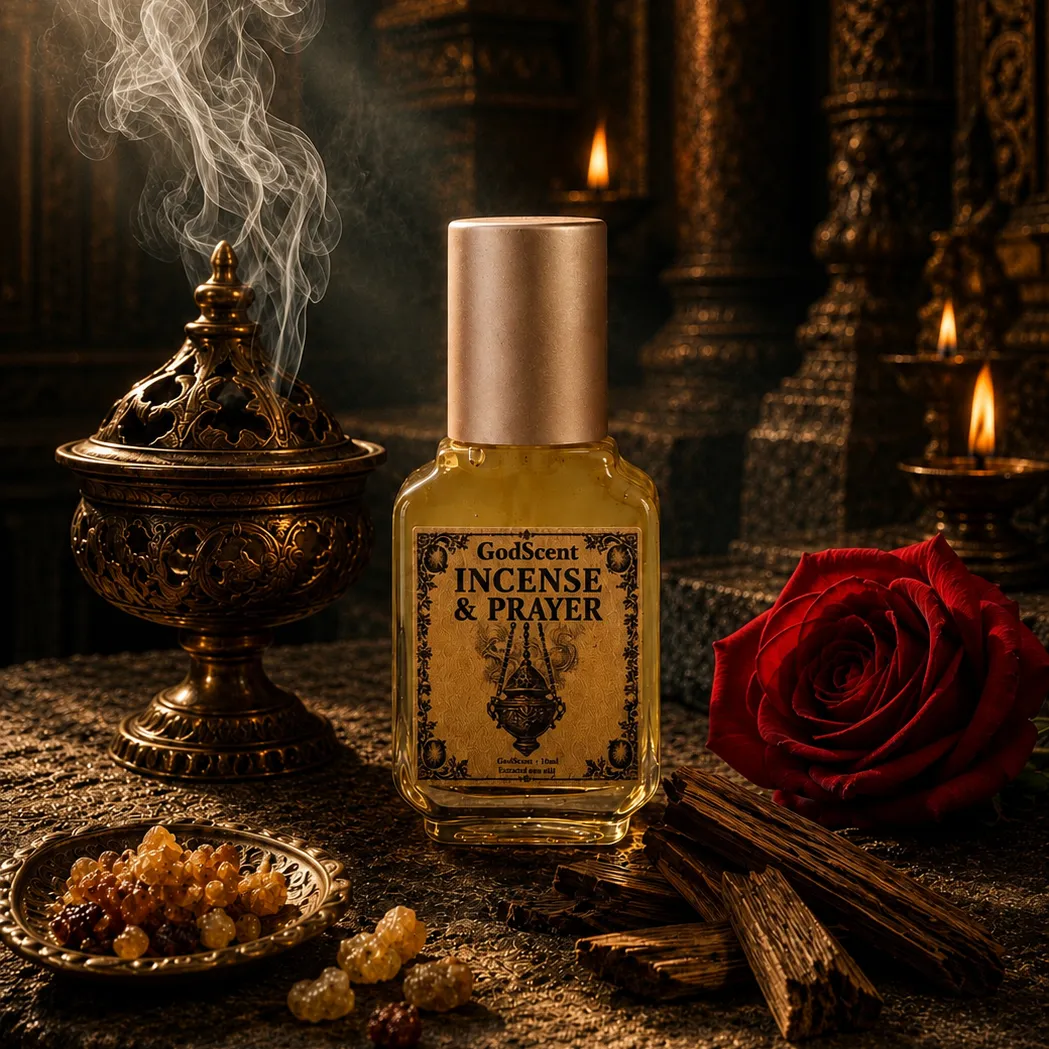
Frankincense and myrrh appear together at the other bookend of Jesus' life, brought by magi to the house where the young child and his mother were staying: "gold, and frankincense, and myrrh" (Matthew 2:11). Scripture never explains the symbolism directly, but the rest of the Bible's use of each substance fills in the picture — frankincense tied to worship and the altar, myrrh tied to anointing and, later, to burial. A deeper look at what each gift actually meant traces both threads, and Incense & Prayer carries both notes as its core.
Prayer Rising Like Incense
Frankincense's association with prayer runs through both testaments. The psalmist asks that his own prayer "be set forth before thee as incense" (Psalm 141:2), and Revelation pictures an angel offering "much incense... with the prayers of all saints," the smoke of it ascending before God (Revelation 8:3-4). Between those two passages, incense and prayer become nearly interchangeable images — smoke rising the way a prayer is imagined to rise, received the way an offering is received.
Elijah and the Rain
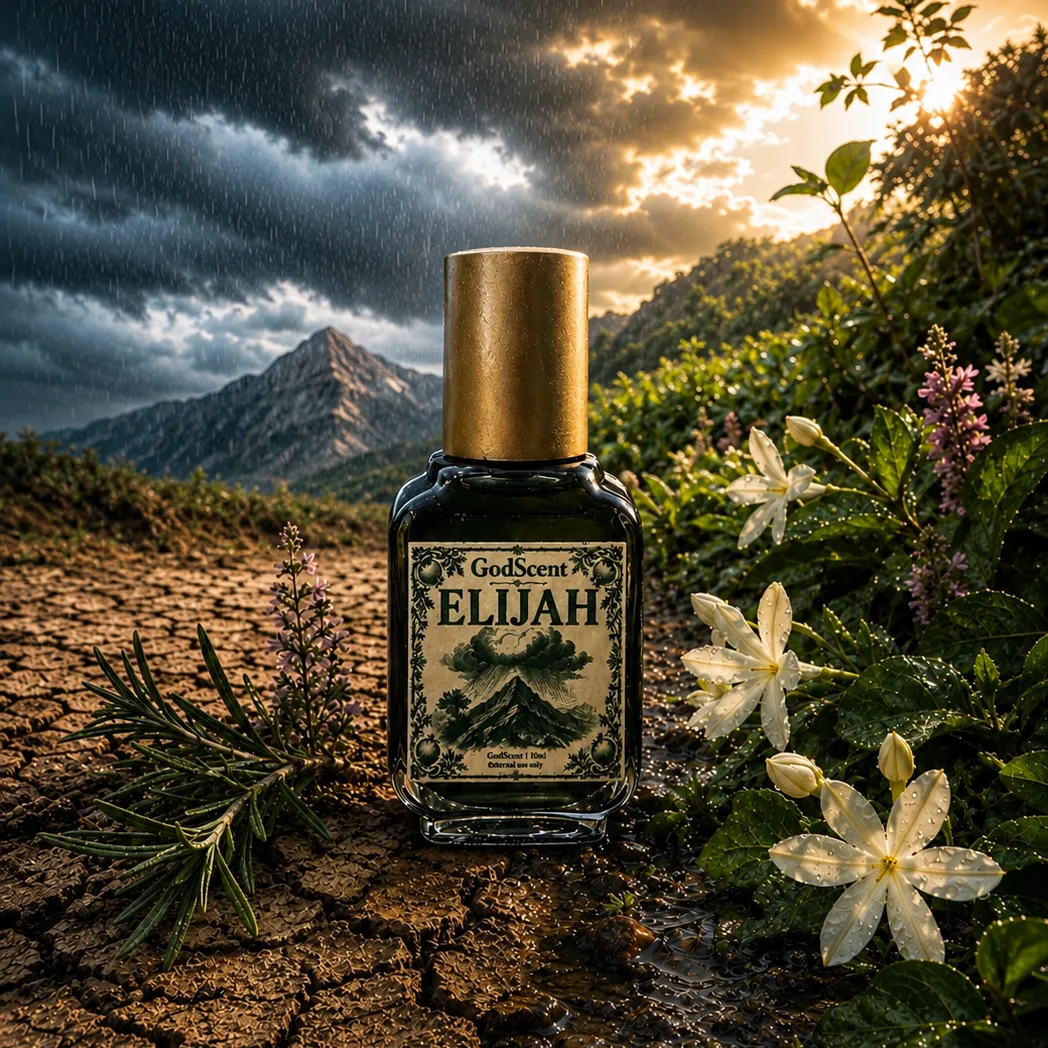
Not every scent in Scripture is a resin or an oil. After three and a half years of drought, Elijah tells King Ahab there is rain coming before a cloud is even visible: "there is a sound of abundance of rain" (1 Kings 18:41). A servant watches the horizon seven times before spotting "a little cloud out of the sea, like a man's hand" (1 Kings 18:44), and the sky turns black with a great rain (1 Kings 18:45). The scene doesn't name a fragrance, but it names an atmosphere — the specific, recognizable smell of rain breaking a drought — which is exactly what GodScent's Elijah is built to evoke.
The Mountain
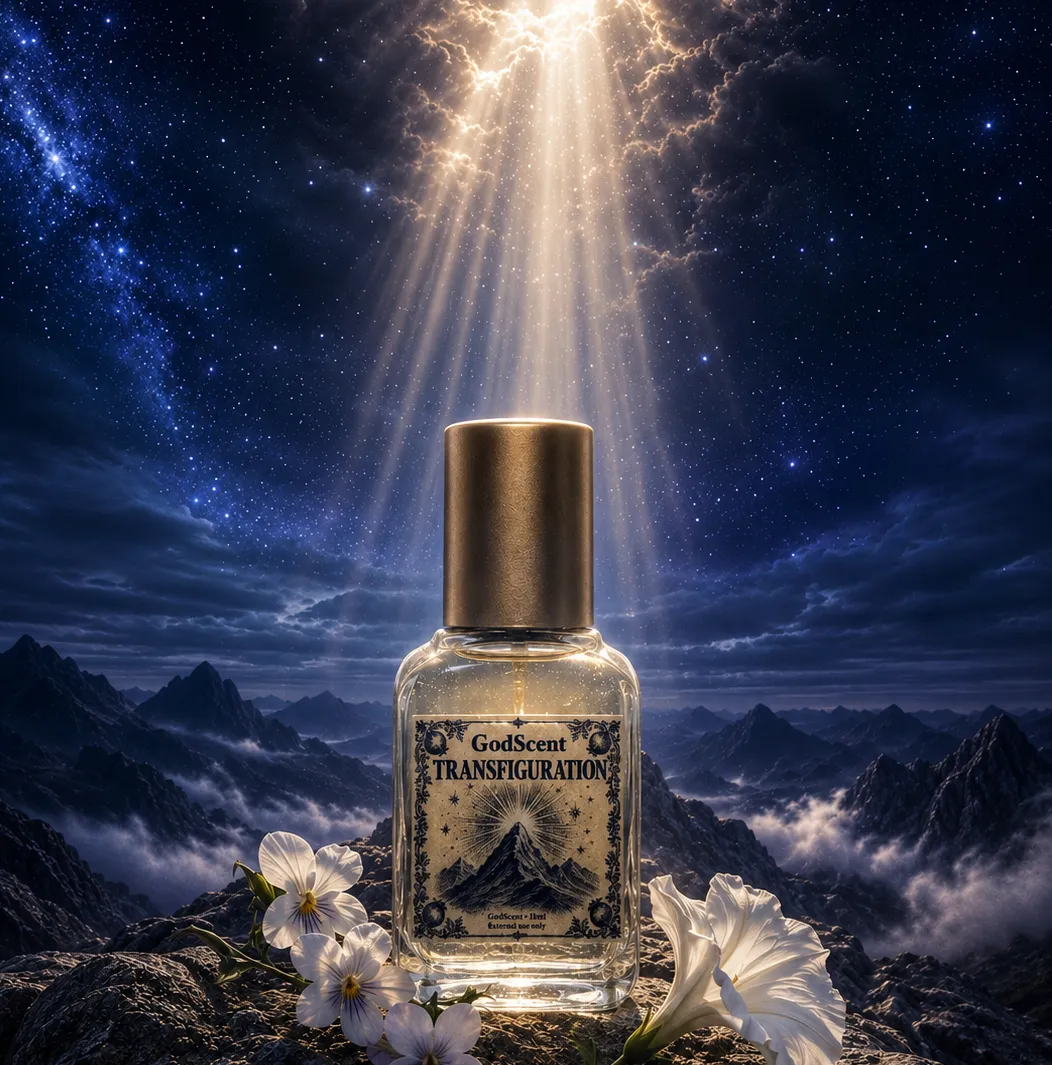
Six days after telling his disciples some of them would see the kingdom of God before they died, Jesus takes Peter, James, and John up a mountain, and is transfigured before them: "his face did shine as the sun, and his raiment was white as the light" (Matthew 17:1-2). Peter, overwhelmed, offers to build three shelters so the moment doesn't have to end (Matthew 17:4). Scripture doesn't attach a scent to this scene — it's the one moment on this list that isn't about smell at all, which is what makes it the odd, fitting anchor for GodScent's Transfiguration: a fragrance built for a moment defined by light rather than fragrance, radiant and weightless rather than grounded.
Burial Spices and an Empty Tomb
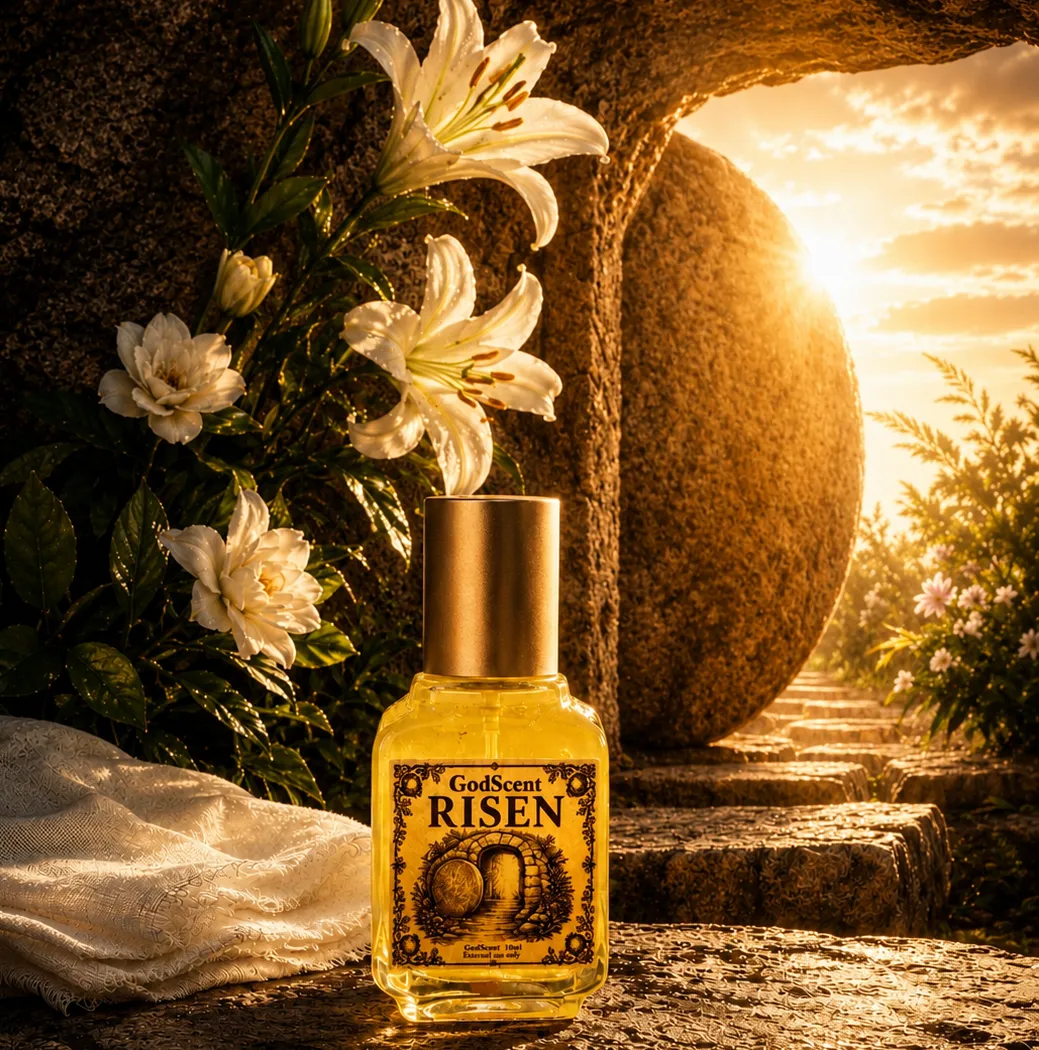
Myrrh returns once more at the close of the Gospels. Nicodemus brings "a mixture of myrrh and aloes, about an hundred pound weight" to prepare Jesus' body (John 19:39), and the women who visit the tomb on the third day come carrying the spices they had prepared for the same purpose (Luke 24:1). What they find instead is an empty tomb and an angel's announcement: "He is not here: for he is risen, as he said" (Matthew 28:6). Inside, only the burial cloths remain, folded and left behind (John 20:6-7) — spices prepared for a body that was no longer there. GodScent's Risen is built around that exact reversal: the fragrance changes on skin over the course of wear, the way the whole scene changes from expected burial to unexpected resurrection.
The Fragrance of Christ
Paul takes every thread above — offering, ritual, ordinary life — and turns it into a metaphor for the Christian life itself. Writing to the church at Corinth, he describes believers as "a sweet savour of Christ," a fragrance that means life to some and something else entirely to others (2 Corinthians 2:14-16). The fuller reading of that passage — including the Roman backdrop Paul is borrowing from — is worth its own visit, and it's the verse behind GodScent's own name.
Every Named Scent, Quickly
Beyond the scenes above, Scripture names specific aromatics again and again. Cedar and hyssop appear together in two separate purification rituals — the cleansing of a healed leper and the ashes of the red heifer — both calling for "cedar wood, and hyssop, and scarlet" (Numbers 19:6; Leviticus 14:4). Hyssop shows up again at the Passover, marking doorposts safe from judgment (Exodus 12:22), in David's plea to be made clean (Psalm 51:7), and once more at the cross, lifting a sponge of vinegar to Jesus' lips (John 19:29) — the same plant, three very different moments. Cinnamon and aloes appear together too, once in the Song of Solomon's garden and once, in a very different context, in a warning in Proverbs about a stranger who has "perfumed her bed with myrrh, aloes, and cinnamon" (Song of Solomon 4:14; Proverbs 7:17). And royal garments get their own description: "All thy garments smell of myrrh, and aloes, and cassia, out of the ivory palaces" (Psalm 45:8). A full ingredient-by-ingredient guide walks through each one with its citation attached.
Why It's Worth Reading Closely
None of this is decoration. Scripture keeps returning to scent at exactly the moments it wants a reader to slow down — an extravagant gift, a costly offering, a body prepared for burial, a tomb found empty. Fragrance in the Bible is rarely just atmosphere; it's usually doing narrative work, marking a moment as significant before the text says so directly. That is the whole premise behind building a fragrance line around these passages rather than around a season or a mood: the material was already there, doing exactly this kind of work, long before anyone thought to bottle it.
Try More Than One
Seven fragrances, seven stories — the easiest way to find which one fits is to try more than one before committing to a full bottle. The Discovery Set carries all seven GodScent fragrances in 5ml roller balls, matched to every story on this page.
Frequently Asked Questions
How many times does perfume or fragrance appear in the Bible?
Depending on translation and how broadly "fragrance" language is counted — including incense, anointing oil, and specific aromatics like myrrh and frankincense — the theme appears well over forty times across both testaments, from Exodus through Revelation.
Is there a single Hebrew or Greek word for "perfume" in the Bible?
No single word covers it. Hebrew uses several terms depending on context — including words for ointment, spice, and incense — and Greek uses osme and euodia for fragrance and sweet smell, and myron for perfumed ointment. Translations render these variously as "perfume," "ointment," "savour," or "sweet odour."
What's the difference between anointing oil and perfume in Scripture?
Anointing oil, at least the specific formula in Exodus 30:23-25, was a restricted ritual blend, explicitly forbidden for personal use. Perfume, as it appears in Ruth, Esther, and the Song of Solomon, was ordinary and unrestricted. The full distinction is covered here.
Which GodScent fragrance should I start with?
It depends which story matches where you are — Esther's preparation, Alabaster's extravagance, Elijah's waiting, Risen's reversal. The Discovery Set is built for exactly this: trying more than one before deciding.