

Anointing oil vs perfume sounds like a fine distinction until you actually read Exodus 30, where Scripture draws the line itself, in plain terms, with a penalty attached. This matters for anyone shopping for a "biblical" fragrance, because the two categories get blurred constantly in how they're marketed — and Scripture is considerably more specific than most product pages are.
The Holy Anointing Oil Was a Formula, Not a Category
Exodus 30 records the Lord giving Moses a precise recipe:
"Take thou also unto thee principal spices, of pure myrrh five hundred shekels, and of sweet cinnamon half so much... and of sweet calamus two hundred and fifty shekels, And of cassia five hundred shekels... and of oil olive an hin: And thou shalt make it an oil of holy ointment." (Exodus 30:23-25, KJV)
This was not "an anointing oil" as a general concept. It was one specific formula, made once, for one purpose: consecrating the tabernacle, its furnishings, and the priests who would serve in it (Exodus 30:26-30). And Scripture is unambiguous about what happens next — this exact blend was never meant to touch ordinary skin for ordinary reasons:
"Upon man's flesh shall it not be poured, neither shall ye make any other like it, after the composition of it: it is holy, and it shall be holy unto you. Whosoever compoundeth any like it, or whosoever putteth any of it upon a stranger, shall even be cut off from his people." (Exodus 30:32-33, KJV)
That is about as direct a restriction as Scripture gives on anything. The holy anointing oil was not a personal-care product. It was made once, for a specific consecrating purpose, and reproducing or wearing it outside that purpose carried real consequences under the law. The incense that burned in the tabernacle received the same treatment a few verses later — a specific recipe, reserved for worship, explicitly forbidden for common use (Exodus 30:34-38).
Perfume, Meanwhile, Was Everywhere
Set against that restriction, ordinary perfume shows up throughout Scripture as something people simply wore — no ritual, no priestly office, no formula limited to one use. Before Ruth approaches Boaz, Naomi tells her to prepare herself: "Wash thyself therefore, and anoint thee, and put thy raiment upon thee" (Ruth 3:3) — grooming and fragrance as an ordinary part of getting ready, not a sacred act. Esther's yearlong preparation before appearing before the king included cosmetic treatments — "six months with oil of myrrh, and six months with sweet odours" (Esther 2:12) — a beauty regimen, not a consecration. And the Song of Solomon treats fragrance as simply part of how people present themselves to someone they love:
"Because of the savour of thy good ointments thy name is as ointment poured forth." (Song of Solomon 1:3, KJV)
Proverbs sums up the ordinary, unrestricted pleasure of fragrance in a single line: "Ointment and perfume rejoice the heart" (Proverbs 27:9). None of these texts carry the warning language of Exodus 30. They describe fragrance as a normal, human, even joyful part of life — the opposite category from the one Moses was told to guard.
It's worth noticing how consistently this second category shows up across very different books, genres, and centuries — law, history, wisdom literature, love poetry — all treating ordinary fragrance the same unremarkable way. Scripture never asks a reader to justify wearing perfume the way it insists on justifying who may touch the altar. That consistency is itself the answer to the anointing oil vs perfume question: one category required explanation and restriction; the other never did.
Where This Leaves a Biblical Perfume Brand
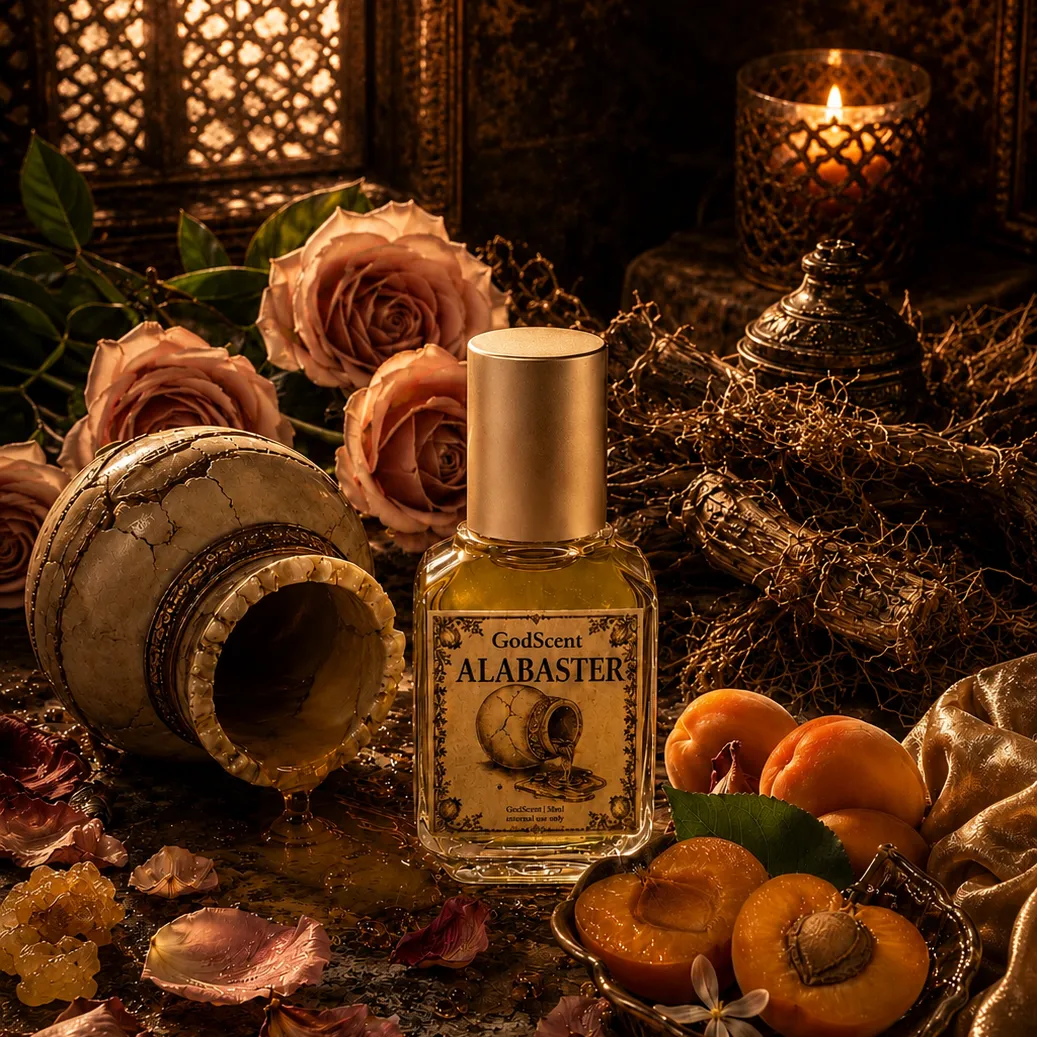
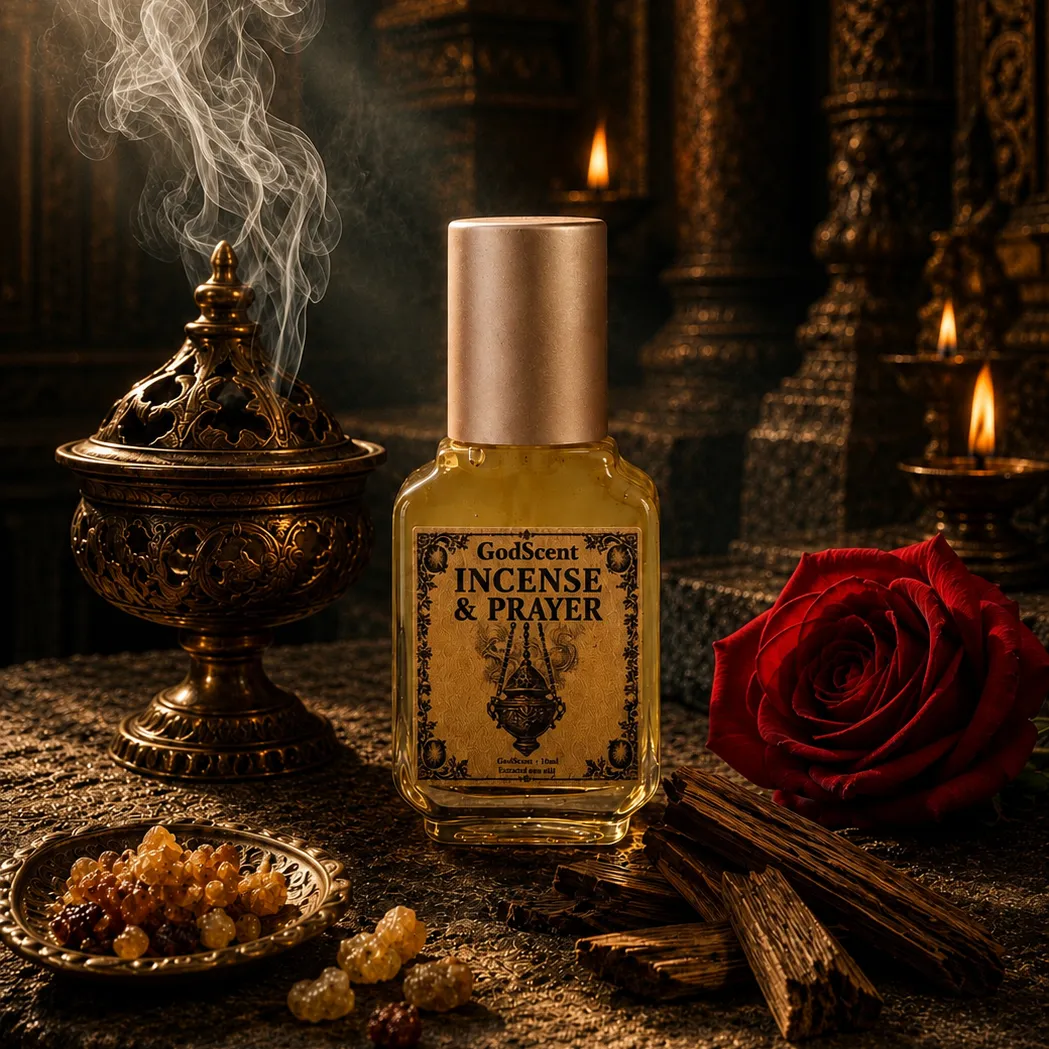
This is exactly why GodScent makes perfume and not anointing oil, and why that distinction is not a technicality. A biblical perfume — a fragrance built from a verse, a story, real notes, worn the way Ruth or Esther or the woman in the Song of Solomon wore fragrance — sits in the same category Scripture treats as ordinary and open to everyone. It is not a claim to recreate the Exodus 30 formula, and it is not a claim about spiritual effect. GodScent's fragrances do not promise blessing, healing, or anointing in the ministry sense. They are perfumes that carry a verse the way a piece of jewelry might carry an inscription — worn, not administered.
That distinction runs through the whole collection — seven fragrances, each tied to a specific story in Scripture, built and marketed as what they are: biblical perfume, not a reproduction of anything Exodus 30 set apart.
If You Want to Try More Than One
Because each fragrance is built around a different figure and a different verse, the easiest way to find which story fits you is to try more than one side by side. The Discovery Set carries all seven in 5ml roller balls, so the choice isn't between reading about a fragrance and committing to a full bottle.
For the wider sweep of where perfume and fragrance appear across Scripture — not just this one legal distinction — the Journal's guide to perfume in the Bible is the place to start.
Frequently Asked Questions
Is it wrong to call a perfume "biblical" if it isn't the Exodus 30 formula?
No — as long as the claim being made is honest. "Biblical perfume" describes a fragrance inspired by a verse or story in Scripture, the same way countless other products reference historical or literary sources. It becomes a problem only if a brand claims to be reproducing the restricted Exodus 30 anointing oil itself, which Scripture explicitly reserved for one purpose.
Does the Bible ever use "anoint" to mean ordinary grooming?
Yes. Ruth 3:3 uses anointing language for Ruth's personal preparation before meeting Boaz, and Amos 6:6 references people who "anoint themselves with the chief ointments" as part of everyday luxury, not ritual. The word covers both the sacred, restricted formula and ordinary personal care, depending on context.
What exactly was in the holy anointing oil?
Exodus 30:23-25 lists pure myrrh, sweet cinnamon, sweet calamus, and cassia, blended into a hin of olive oil, in specific weighted amounts. It was one exact formula, made once, for consecrating the tabernacle and its priests.
Does GodScent make any health or spiritual-effect claims about its fragrances?
No. GodScent's fragrances are perfumes — built from real notes, tied to a scripture and a story. They are not marketed as having healing, blessing, or spiritual-efficacy properties.