
Biblical scents rarely get gathered in one place. They're scattered across Exodus, the Psalms, the Song of Solomon, the Gospels, and Proverbs, each one showing up for a different reason — ritual purification, romantic poetry, royal luxury, a warning. This guide pulls the most-named aromatics together, one at a time, with the actual verses attached.
Spikenard
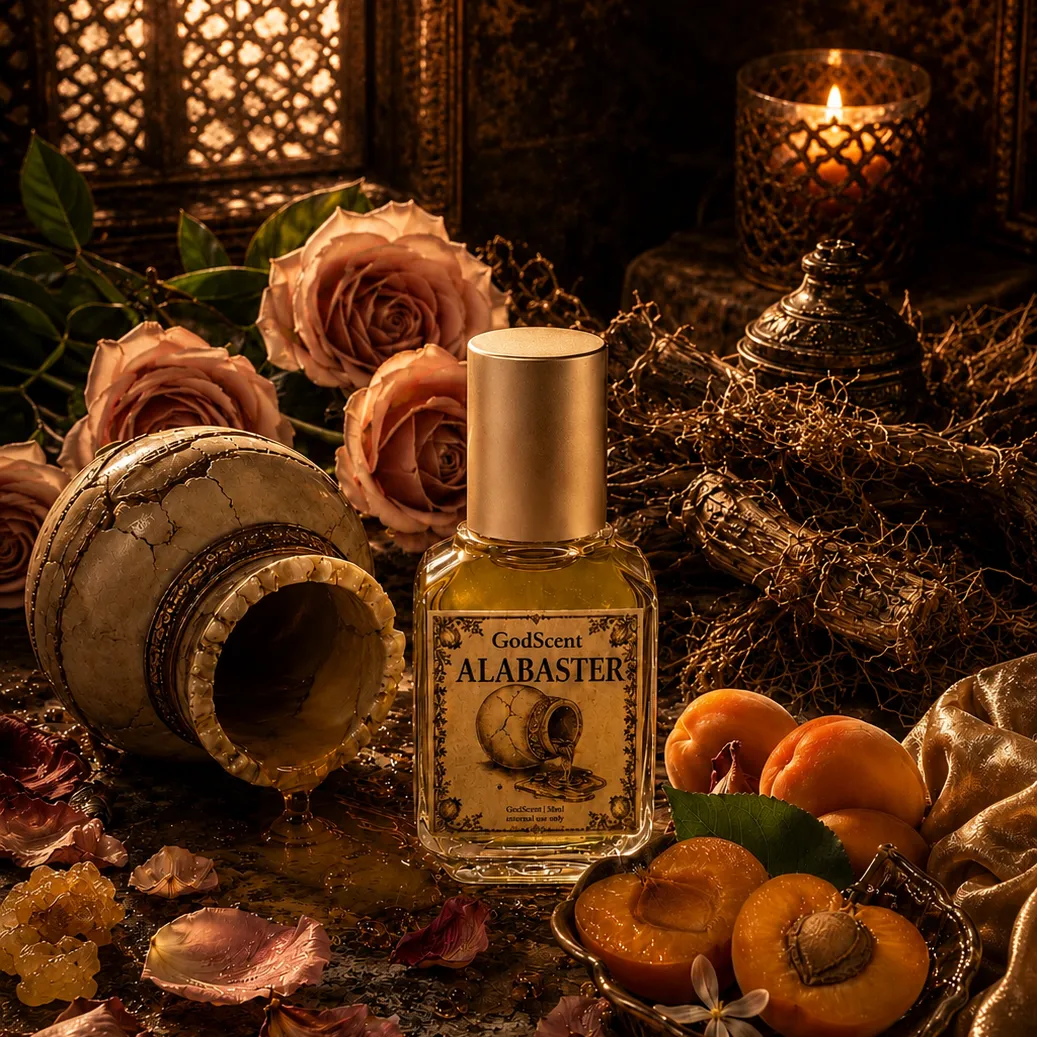
Spikenard is the fragrance most tied to a single unforgettable scene: a woman breaking an alabaster jar of it over Jesus at a dinner in Bethany, filling the house with the smell (Mark 14:3, John 12:3). It also appears twice in the Song of Solomon as part of a garden of aromatics (Song of Solomon 4:13-14). For the full story behind this one, the Journal has a dedicated piece on spikenard and the alabaster jar — and GodScent's Alabaster carries it as its central note.
Frankincense and Myrrh
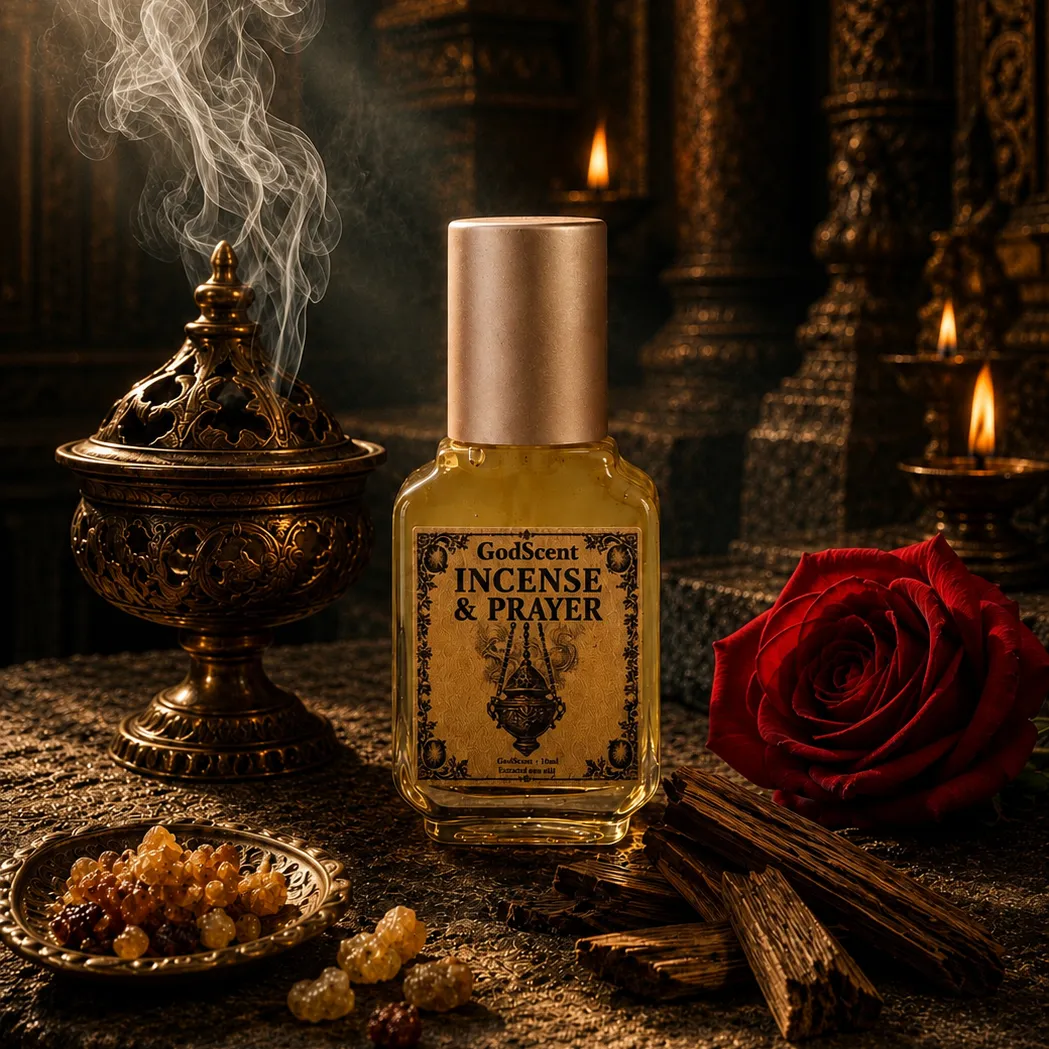
These two get named together at the nativity (Matthew 2:11), but Scripture actually keeps them mostly separate: frankincense belongs to the incense burned in the tabernacle (Exodus 30:34), myrrh to the anointing oil poured on priests (Exodus 30:23-25) and, later, to burial spices (John 19:39). A full breakdown of what each one meant covers the distinction in depth. Incense & Prayer carries frankincense and myrrh together as its core.
Cedar
Cedar's biblical role leans architectural as often as aromatic — it was the wood Solomon imported from Lebanon to build the temple (1 Kings 5:6-10), and the psalmist compares the righteous to a flourishing cedar (Psalm 92:12). Its most striking pairing, though, shows up in two purification rituals: the cleansing of a healed leper and the ashes of the red heifer both called for cedar wood alongside hyssop and scarlet thread.
"And the priest shall take cedar wood, and hyssop, and scarlet, and cast it into the midst of the burning of the heifer." (Numbers 19:6, KJV)
Balaam's oracle over Israel pictures cedar trees again, this time alongside aloes: "as the trees of lign aloes which the LORD hath planted, and as cedar trees beside the waters" (Numbers 24:6) — a rare instance of the two named side by side.
Hyssop
Hyssop is defined almost entirely by ritual use rather than romance. It was the plant used to apply the Passover lamb's blood to the doorposts in Egypt (Exodus 12:22), and it reappears in the same purification rites as cedar (Numbers 19:6, Leviticus 14:4). David reaches for it as a metaphor for being made clean: "Purge me with hyssop, and I shall be clean: wash me, and I shall be whiter than snow" (Psalm 51:7). And in one of Scripture's most striking small details, hyssop appears again at the crucifixion, lifting a sponge of vinegar to Jesus' lips on the cross (John 19:29) — the same plant that marked doorposts safe from judgment, present again at the final act of that same story.
Cinnamon
Cinnamon shows up as one of the spices in the holy anointing oil (Exodus 30:23) and, more vividly, in the Song of Solomon's inventory of a garden's aromatics, paired with spikenard, saffron, and frankincense (Song of Solomon 4:14). It also appears in Proverbs, in a passage warning a young man away from a seductive stranger who has "perfumed my bed with myrrh, aloes, and cinnamon" (Proverbs 7:17) — not an endorsement, but real evidence that cinnamon was a recognizable, desirable domestic fragrance in daily life, used the way perfume is used today.
Aloes
Biblical "aloes" refers to fragrant wood — likely agarwood — not the succulent plant most people picture today. It appears in that same Numbers 24:6 oracle alongside cedar, in the Proverbs 7:17 warning alongside cinnamon, and in one of the Bible's most striking descriptions of royal fragrance:
"All thy garments smell of myrrh, and aloes, and cassia, out of the ivory palaces." (Psalm 45:8, KJV)
Aloes returns one final time at the close of the Gospels, when Nicodemus brings "a mixture of myrrh and aloes, about an hundred pound weight" to prepare Jesus' body for burial (John 19:39) — the same wood named in poetry now present at a tomb.
Saffron and Pomegranate
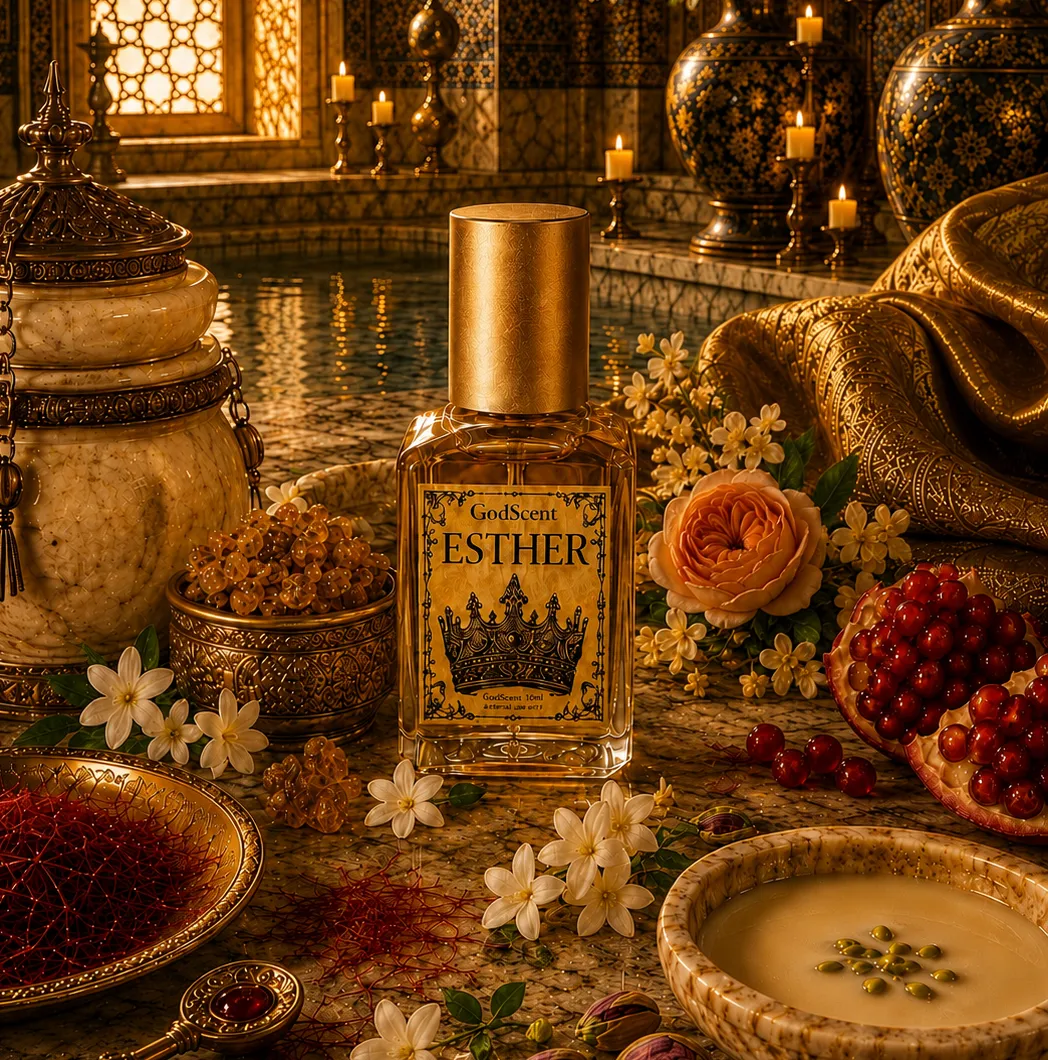
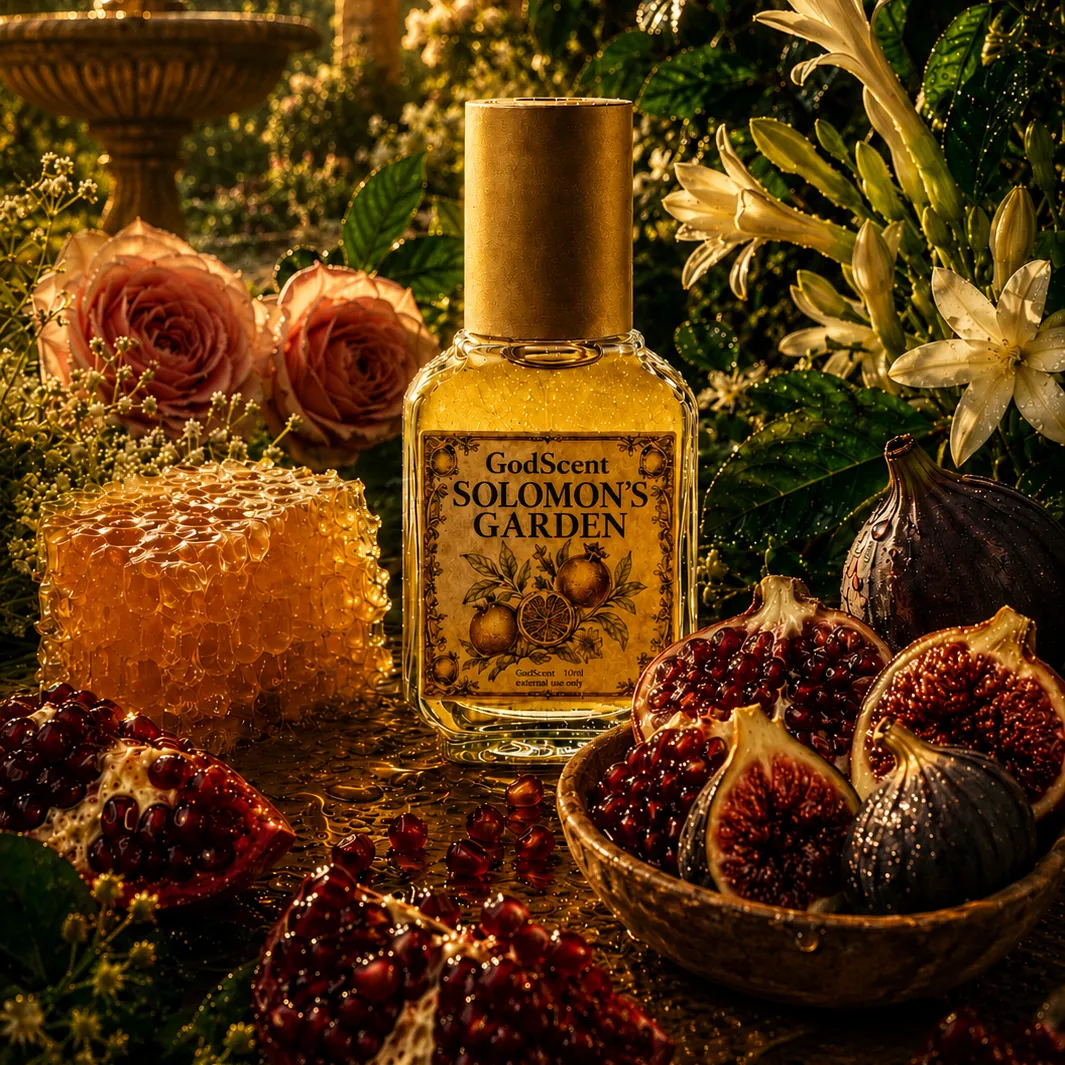
Two more worth naming: saffron appears in the Song of Solomon's garden list (Song of Solomon 4:14) and in Esther's preparation before the king, among the "sweet odours" of her year of readiness (Esther 2:12) — the note GodScent's Esther carries as one of its own. Pomegranate is named repeatedly in the Song of Solomon's garden imagery (Song of Solomon 4:13, 8:2), the anchor for Solomon's Garden.
What These Words Meant to the People Who Wrote Them
None of these were abstractions to their original audience. A reader in ancient Israel knew the sting of hyssop's ritual use, the cost of true cinnamon carried in from distant trade routes, the particular gravity of cedar timber shipped down from Lebanon for a king's temple. When a biblical writer reached for one of these words, it carried the same specificity a modern reader gives to naming an exact material — not "wood," but cedar; not "spice," but cinnamon. That precision is worth preserving rather than flattening into a generic "biblical spices" category.
Reading Further
This list is not exhaustive — Scripture names other aromatics in passing, and scholars still debate the exact plant behind a few Hebrew terms. For the fuller narrative sweep of where fragrance shows up across the whole Bible, from the alabaster jar to the resurrection, the Journal's guide to perfume in the Bible is the place to start.
Frequently Asked Questions
Is biblical "aloes" the same plant as the aloe vera sold today?
No. Biblical aloes (Hebrew ahalim) refers to a fragrant wood, most likely agarwood, unrelated to the succulent plant known today as aloe vera.
Why does hyssop appear so often in purification rituals?
Hyssop's small, bushy branches made it useful as a natural sprinkling tool, which is likely why it became associated with applying blood or water in cleansing rites — from the Passover doorposts (Exodus 12:22) to the cleansing of a healed leper (Leviticus 14:4).
Are frankincense and myrrh biblical scents in the same category as cedar and hyssop?
Not quite. Frankincense and myrrh are resins burned as incense or blended into oil; cedar and hyssop are wood and plant material used more for ritual and building. All four are genuinely biblical scents, but they served different practical roles.
Which GodScent fragrance is built closest to these biblical scents?
Several draw directly from this list: Alabaster carries spikenard, Incense & Prayer carries frankincense and myrrh, Esther carries saffron, and Solomon's Garden carries pomegranate. Each product page lists its full notes.